• For my white paper, I decided to focus on the effectiveness of the National Hockey League’s marketing. If you know anything about hockey, you know that the NHL doesn’t do the best job of marketing itself outside of the hockey bubble. The league knows how to engage fans once they already like hockey, but it struggles to convert other sports fans into hockey fans. It’s a shame because hockey is such a fast-paced sport filled with exciting goals and massive hits. If the league did a better job of getting new eyes on the game, I can almost guarantee those viewers would stick around.
    Because of this, my paper discusses all the ways the NHL could improve its marketing efforts. For starters, I believe it’s important for the league to focus on younger generations. There’s a wave of young players entering the NHL who are very relatable to today’s youth hockey players. These new players can also attract new fans with their creative styles of play. In addition, the NHL needs to capitalize on its major events. Last season, the league had a great opportunity with the Four Nations Faceoff, and it has a similar opportunity this year with the upcoming Winter Olympics. These are perfect chances to get people engaged and rooting for their countries.
    Overall, there’s a lot the NHL can do to market itself better. Hopefully, some of these ideas can actually come to fruition, as I would love to see my favorite sport continue to grow.

    Because of this, the paper talks about all the things the NHL could be doing better. For starters, I believe it’s important for the league to focus on the younger generation. There is a wave of young players coming into the league that are very relatable to the young hockey players of today. In addition, these new players can attract new fans with there more abstract style of play.
  • Having stress take over can be a huge motivation killer. I just had this happen to me the other day. When you have too much going on, it can really take over and make you not want to do anything. It is really a problem because once you lose motivation, all bets are off. It is really a problem as it really stops you from doing most things productively. Johann Hari says, “The number-one reason… for their [attentional] problems… was stress” in Chapter 10. Because of this, it is really important to rest.

    After having all of this time, it is important to take time for yourself and rest. You don’t need to necessarily go to sleep, but it is important to relax. Chapter 11 of Stolen Focus: Why You Can’t Pay Attention states, “Your brain doesn’t necessarily switch off as easily if you’re going, going, going. You don’t take that time to switch off and relax… Your brain becomes accustomed to thinking constantly.” This means that taking time to just turn off our brains is really crucial. Good ways to relax are taking a shower or bath, laying down and watching a favprote show or movie, or even just turning off the lights and going to sleep are good ways to relax. Just taking time to drown out the noise and just focus on yourself is really crucial.

    Realistically, if you don’t do anything in regards to resting, it won’t benefit you. Hari mentions in Chapter 11 that, “As you become tired, your attention will indeed blink out … even if your eyes are open and you are looking around you, you can lapse … into a state called ‘local sleep.” Local sleep is basically your mind going numb. There are a bunch of things going on, and you don’t know what to do or what to focus on. That is why it is so important to rest. Without it, you are setting yourself up for failure and could potentially make it so that less stuff gets done.

    Something specific that Hari talked about is financial stress. Obviously, worrying about money is going to take a toll on your stress. Stolen Focus talks about “If you have to worry about your financial situation … it takes a lot of the capacity of your brain. If you don’t have to worry, then it improves your capacity to think about other things.” This makes total sense, as financial issues will put a halt to anything you are doing. If you any bit of what you are doing is paused because of money, this can really demotivate you and make it impossible to get other things done.

    All and all, it seems that getting rest is very crucial to preventing stress levels from getting high. By taking control over everything going on, you can manage your time better and lessen the amount you have going on at once. After that, you can get proper rest that helps everything else.

  • According to Mindmapping.com, a mind map is a “diagram for representing tasks, words, concepts, or items linked to and arranged around a central concept or subject using a non-linear graphical layout that allows the user to build an intuitive framework around a central concept.” Personally, whenever I see a mind map, I always think of a detective’s board, where it has the spider web of string connecting everything, but in reality, that is kind of what it is. It is a way to take a bunch of related ideas and bring them together. Something else that makes me think of mind maps is a Prezi presentation. You can zoom it back super far, and it gives off the same idea of a mind map. Regardless, mind maps are very useful for many purposes.

    It seems like a really good way to just get ideas onto paper, then they could get organized into subcategories. I can see this being super useful in graphic design when creating a brand identity. If you take a bunch of words and images that your client likes and relates to, you can stick them on one mind map and connect them all together. This makes total sense as a Psychology Author and Television Presenter, Tony Buzan, was the one to come up with the term mind map, according to The Interaction Design Foundation. It goes on to talk about how “in user experience (UX) design, effective organization and a clear understanding of information are nothing short of vital for any digital product to succeed. Sure enough, designers and design teams depend on this clarity to help create user-friendly products and services.” This is definitely useful to someone who has a designer mind, as looking at ideas and concepts more visually is definitely very useful.

    Something else that mind maps seem like they could be useful for is formulating ideas for an essay. It could be a step before writing an outline as an informal way to get your ideas onto paper. Depending on how you write and how your brain works, this can definitely be helpful. I have never tried this, but I really wouldn’t be opposed to the idea. Overall, it could be a good step to dive into a longer essay, just like the white paper we need to write. According to the Graduate College at Illinois, “The key of mind mapping is that it allows a writer flexibility while discouraging us from thinking too much about the phrasing, layout, and sentence-level structure of our ideas.” This basically confirms my point, showing that mind maps are good at laying out ideas before you have even thought about writing your paper or your outline.

    Despite being unfamiliar at first, it seems like mind maps are an underrated tool in our everyday lives. From being useful in academic settings, like writing a paper, or in a more professional setting, like helping clients create brand identities and other designs, they seem very practical.

  • When researching the project management websites like Monday, Trello, and ClickUp, they seemed somewhat useless. All of the things they have to offer can be done in a spreadsheet. I work a few jobs, and that’s the way I’ve done it all my life. For one of my jobs, everything is exclusively through email. All I get are emails requesting graphics for me to do, and it is that simple, back and forth. For my job at the Recreation and Wellness Center here at Quinnipiac, all of my requests come through a Word document that I fill out and then put into organized folders. These systems aren’t the best in the world, but they definitely work for what I am doing. Johann Hari points out that “we’ve built systems that fragment our attention, even when we think we’re being efficient,” and I think that fits how I’ve used these older methods. To my knowledge, these programs make the most sense when you are managing bigger teams.


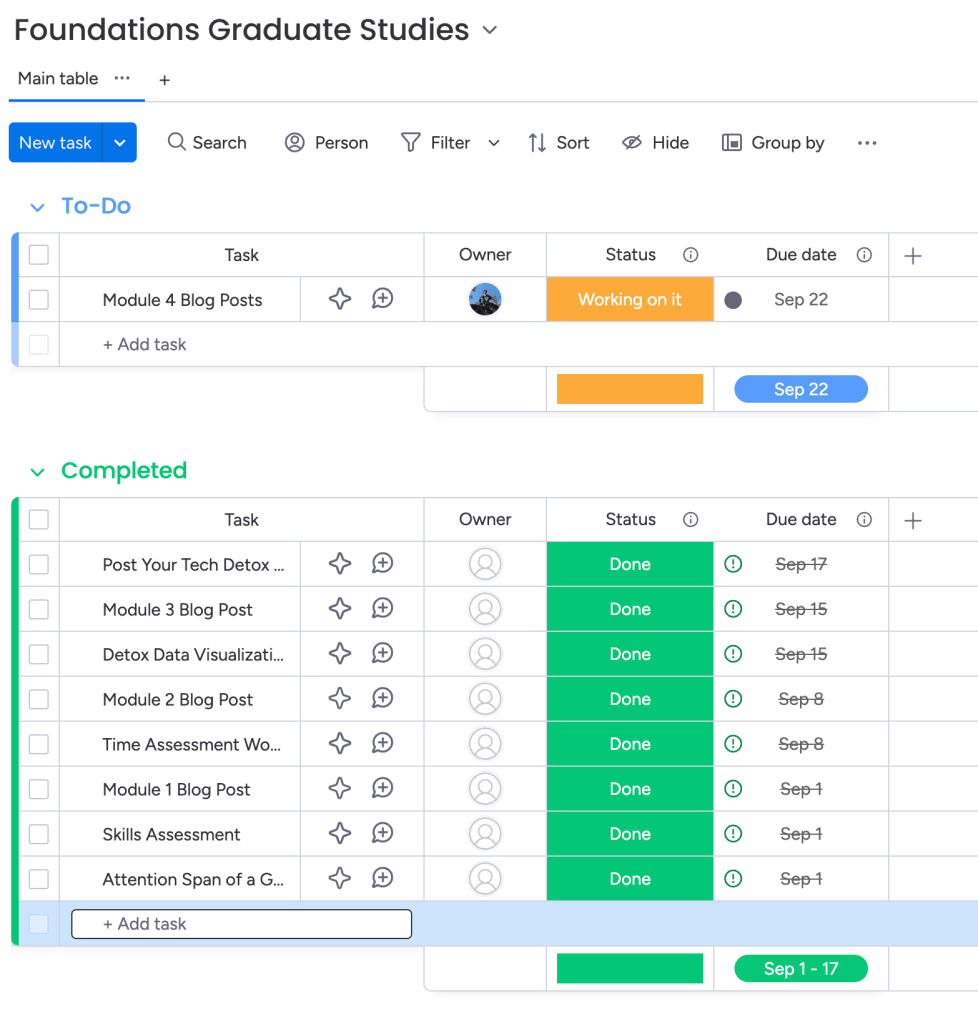
    I recently had an experience which made me like programs like these. Those previous examples I gave for teams that are no bigger than a handful of people, but this year, I am working part of The Agency. This is a class offered at Quinnipiac, which is meant to mimic how a real-life agency works. Part of this class, there are five sets of teams working together for four clients. With the number of people and the amount of things we are doing, these project management programs would be very useful. We just finished up with our first client this week, and we used an Excel document. After using it for a few weeks, I can confirm that it was somewhat messy. It is super hard to keep organized unless it is organized properly. This is where I can see these websites being useful.


    The one I decided to use is Monday.com. This is the one I have heard the most about and believe to be the most popular. Off the bat, I really enjoy to UX or the website. It is simple to use on the back end, and it seems even easier on the front end. I was able to add all the tasks I wanted to and label if they were done, being worked on, stuck, or not started. This seems like a really genius system as it lets the boss or manager know what is being worked on, and even if you are stuck on something. It is quite simple, but it seems to work really well. Another way I can see this being good for is for a personal tracker. You can label things for different projects, so I could put all my class assignments and all the things I need to do for class, and separate them.


    For the time I have played around with the site, I really enjoyed it. It seems really simple to use, but perfect if you have a big team of people to manage or work with. Even though I was skeptical, I can see how this works well in a big company or agency. I am so on board with these that I would want The Agency class to use it for our projects, that’s how organized it is.

  • As we’ve talked about and read so many times before, there are so many things going on that are meant to grab our attention. This is a big topic mentioned in Stolen Focus: Why You Can’t Pay Attention, where it says, “The truth is that you are living in a system that is pouring acid on your attention every day, and then you are being told to blame yourself and to fiddle with your own habits while the world’s attention burns.” There are so many things going on, which are being described as acid, that are ruining the real things that need to get done. All over, there are so many people or things that are meant to be more engaging than the thing that is supposed to be done.

    This is very apparent in our everyday lives and something we tested with the technology detox. Despite taking away technology, which is designed to distract us, the distraction is still alive. There are tons of people or places that can be used as a distraction. Just sitting here writing this, I have looked around for something to distract me. As bad as that sounds, it is very easy to go and distract yourself if you want to. This is a big problem as it can really prevent you from being productive and getting things done that need to be done. Johann Hari talks about how “we are that server, and there are all these things trying to grab our attention by throwing information at us… It undermines our capacity for responding to anything. It leaves us in a state of either distraction or paralysis.” This is a great way to view it, as this is what is going on. Distractions do undermine our ability to respond to things, and these distractions are meant to get our attention.

    The real solution to this is self-control. At the end of the day, these distractions will always exist, and there is realistically nothing you can do about them. You can just sit down, lock into whatever needs to get done, and actually do it. This sounds super simple, but actually doing something is the best way to avoid distractions. For me at least, once I am focused and actually doing something, it will get done. Stolen Focus: Why You Can’t Pay Attention continues with this point by saying, “You can try having self-control, but there are a thousand engineers on the other side of the screen working against you.” You can take this engineer analogy that Hari is talking about and take it further. In addition to the thousands of engineers, there’s a main person in front of them watching them work. You can choose if you are going to continue and watch one, or if you are gonna take a step back and get done what needs to get done. Being able to concentrate and have self-control is the main thing needed in order to fight back against these distractions.

  • A social media detox is a great way to get someone unaddicted to something that is, in hindsight, very addictive. Apps like Instagram, TikTok, X (formerly known as Twitter), and others have algorithms designed specifically to keep you on the app and to keep scrolling. As Johann Hari puts it in “Stolen Focus: Why You Can’t Pay Attention”, “The algorithm they actually use varies all the time, but it has one key driving principle that is consistent. It shows you things that will keep you looking at your screen.” This was recently popularized with the short-form content system that has been popularized by TikTok. Since then, every single app has come out with its own version of it: Instagram and Facebook have Reels, YouTube has Shorts, and Snapchat has Spotlight. With these 10 to 30-second videos, you are meant to constantly keep scrolling. Stolen Focus: Why You Can’t Pay Attention explains that this system “hacks our focus by triggering our impulses, not our intentions.” This is very different from a site like YouTube or streaming services like Netflix, Hulu, or HBO Max, where the user has to actually click on what they want to watch. In addition, everything on those platforms is long-form videos or movies.

    For my detox, I decided to cut out this very short-form content that is rotting our brains. I chose this as it is something I struggle with and would be a challenge for me. One aspect I had to line up is how I was going to do this with my job. For work, I do graphic design and social media management for two hockey teams. Because of this, I couldn’t delete any of these apps. This is why I decided to only eliminate the short-form aspect of these apps.

    To be honest, this challenge wasn’t as hard as I was anticipating. The week that I did this was surprisingly really busy, so I didn’t have too much time to scroll. One thing that I did miss was putting on videos as background noise. I find that I work much better when I have something playing in the background. For example, right now I am sitting in my common room with the TV on. But for the week, I decided to use music as a replacement for the reels I usually used. Besides that, the challenge to not scroll wasn’t really an issue. The only time I found myself wanting to scroll was when I was bored or tired/unmotivated from work. These times, I just wanted to turn my brain off and enjoy myself. After realizing what I was doing, I realized this was a really inefficient way to spend my time and prevented myself from continuing.

    Johann Hari explains this great by saying, “When you stop stimulating your brain with constant input, it begins to heal, you start to remember what real attention feels like.” Overall, I am really glad that I did this. Going a week without being on social media made it pretty obvious what these companies are doing. These addictive apps are made to keep us on their site, and we more times than not just follow along. In Hari’s words, “It’s not your fault you can’t focus. It’s by design. Your distraction is their fuel.” Even though I don’t plan to keep going with this detox, I plan to try to find ways not to distract myself when I work.

  • The current image has no alternative text. The file name is: time-managment.jpg

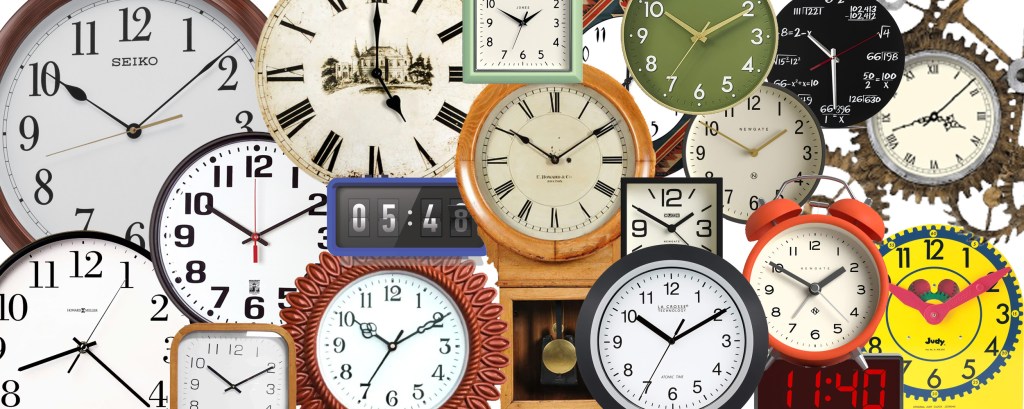
    Time management is a ridiculously important skill. If you do anything in life, you need to manage your time. This is especially true in college. Students are taught how to balance all the activities they are doing on top of their school work and social time. I know for me, it feels like I have a million things going on. For example, I work for two different hockey teams, do design work for the sports organization on campus, work 10 hours a week at RecWell, am taking 16 credits, and have to balance all of that with being able to hang out with my friends, family, and girlfriend. Stolen Focus talks about this saying, “We live in a culture that constantly asks us to do more and more, and it’s burning up our ability to do one thing well.” Obviously, that is a lot, but it is manageable when you have good time management skills.

    Something I find really useful is having some sort of calendar or planner so you know what is due when or where you need to be when. I have several different systems in place that work for me. One thing that I do is constantly look at the calendar pages on Canvas and Blackboard. Seeing everything lined up nicely on a calendar is very useful to see. From there, I can compare it to my school and work schedule. Talking about those, I have reminders set on my phone 15 minutes before all of my classes and shifts to remind me about them. These aren’t always used, especially towards the latter half of the semester, but they are definitely good to have and keep you in a route. This also comes in handy when things are “off” about your routine. For example, if a class is canceled or if a shift is moved from its normal time. Regardless of changes, having tools to keep you on a routine and keep you organized is very useful. Despite any changes made, I am always on task.

    Something else I find very important is communication with others. Communication is key in many aspects like and time management is one of those things. I find it very useful to talk to people, as you learn information you might not have known about. I do this all the time when it comes to both school and work. If I don’t understand something or want some clarification about something relating to due dates or something else time-related, I will go talk to a classmate. They will either be able to help me or also show their confusion. Both of these things are useful because then we can come to a conclusion together. I also do this a lot for work. As I work for a hockey team in Oklahoma, I am not always the most aware of what is going on. This is why it is important to communicate with your coworkers. This will keep everyone on task and help them manage their own time.

    Because of all that is happening in our busy lives, time management is super important. This just helps you stay organized and get everything done promptly. Hari explains this perfectly by saying, “When you are constantly interrupted, you start to internalize the interruption, you become your own interrupter.” Overall, it helps you balance what you need to do and makes sure you are all set with everything that needs to be done.

  • Writing this was harder than it should have been, and all of it had to do with the issue at hand: attention spans. In recent years, my attention span, as well as others around me, has really gotten worse. With the changing social media landscape, it is hard to avoid distractions. While writing this, I struggled not to check my phone or talk to my suitemates. The whole concept of being able to sit down and completely focus on what you are doing is really hard now. As Johann Hari writes, “We are living in a serious attentional crisis — one where our collective ability to focus is breaking down.”

    I think a big piece of this is short-form content. TikTok and other short-form content really make it key to get things put in front of your face in the quickest and most entertaining way. They prioritize shorter videos that are usually below a minute long. In addition, creators put flashy graphics or gameplay on the screen to distract the viewer and make them not want to scroll. And if all of this wasn’t enough, you could hold down on the side of your phone to make the content run at 2 times speed. All of these things combined are really rotting our brains and ruining our attention spans.

    In addition, other social media sites like Instagram, YouTube, and Snapchat have all released their own versions of TikTok, Reels, Shorts, and Spotlight, respectively. Wherever you go on the internet, there are short-form videos you can watch that have the goal is to locking you into doomscrolling. Social media platforms want to keep your eyes on their platform as long as they can, so having addictive content is good for this goal. Having people be able to doomscroll is exactly what they want, as they lose a sense of time, and the videos are right there for them to access. Stolen Focus bluntly says, “The truth is that our attention didn’t collapse. It was stolen.”

    I think the solution to this is to embrace this content. As counterproductive as that sounds, I think lessening or even banning it will just make people want it even more. Being able to take important things and make them more efficient to fit the worsen attention spans can make everything quicker overall. After we have made things more efficient, we could potentially have room to grow our attention spans, as we have the time to stop and smell the roses. I feel like this idea needs to be explained and studied, but the idea of taking things that are a while and making them more tolerable would be good overall.

    Being able to adapt to the way our brains are now instead of trying to mold them into how they are “supposed to be” seems much easier and more beneficial to everyone involved. There are so many things that can adapt to this new style that haven’t been updated in decades. Being able to take something old and morph it into something new is a very crucial tool and will overall help our attention spans in the long run.

    As this is coming to a close, I think it is important to be able to sit down and lock into something. Something that works in my brain is once you get interested in something, the wave a motivation will just come to you. That seems like an important lesson to take away from this and is a great way to help with the attention span issue.